
Shipping VibeChess: A Mobile Chess Product, Not Just a Demo
A chess puzzle demo is a screen. A chess product is a loop: start fast, solve fast, get feedback fast, and have a reason to come back tomorrow.
VibeChess started from a simple game premise — mate-in-one puzzles, timed, head-to-head. The chess logic was never the hard part. The hard parts were everything around it: adaptive difficulty, real-time match infrastructure, Elo progression, bot fallback when the player pool is thin, subscriptions, crash reporting, streak tracking, account deletion, and making all of it hold together on iOS and Android without embarrassing failures.
This is a case study on what it takes to turn a chess game idea into a shippable mobile product.
The Core Loop
VibeChess is built around two modes: practice and duels.
Practice mode serves mate-in-one puzzles from a database of more than 650,000 positions. Difficulty adapts based on the player's puzzle performance, so the training session stays challenging without becoming discouraging. Players track streaks, earn milestone rewards, and work through daily puzzle challenges. A freeze mechanic lets players protect their streak on missed days — which keeps the habit-building feel without turning a single missed day into a reason to quit.
Duel mode puts two players against each other on the same position simultaneously. The player who spots the winning move first takes the point. The Elo system translates results into a visible rating, with leaderboards and match history giving the competitive context to care about the number.
Guest mode gives players a path into the core loop without creating an account. That is a UX decision and a state-management decision at the same time. Guest progress has to feel real without leaking into account-specific state when the player later signs up.
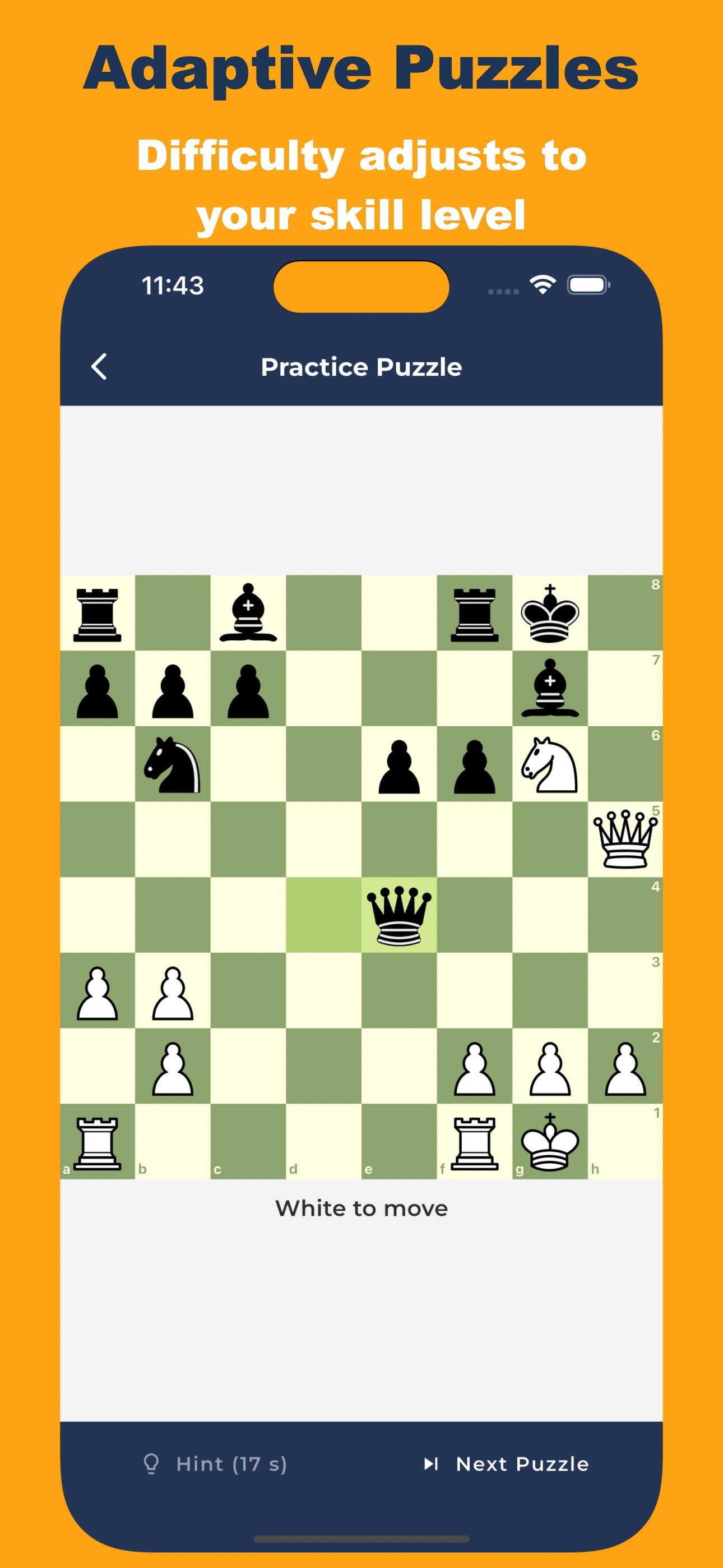
Practice mode adapts puzzle difficulty to the player's performance, keeping training sessions challenging without becoming discouraging.
Real-Time Was the Hardest Part
Real-time multiplayer sounds like a feature. It is a different category of engineering problem.
The match lifecycle has clear stages: queue entry, matchmaking, match found, move submission, game update, result calculation. Writing out those stages takes twenty seconds. Making them work reliably across two mobile clients over flaky connections takes considerably longer.
The structural problem is that real-time bugs are hard to reproduce. They depend on timing, network conditions, and two simultaneous client states. A unit test can verify that a single move submission returns the right result. It cannot simulate what happens when both players submit at the same millisecond, one client drops mid-match, or a device rotates and triggers a widget rebuild while a socket event is in flight.
The approach that worked was treating the server as the authoritative source of truth at every point. The backend holds game state. The Flutter client holds display state. Reconciling those two views — and recovering cleanly when they diverge — is where the real work lived.
Two specific problems took the longest to resolve. The first was disconnect handling: what the server should do when a player disappears mid-match, and what the client should show when the connection drops during an active game. The second was move validation under concurrency: ensuring that near-simultaneous submissions from both players resulted in a deterministic, fair outcome rather than a corrupted game state.
Neither problem was exotic. Both were well understood by the time we shipped. The underestimated part was the time it took to surface them through testing, because they required real concurrent clients rather than isolated unit tests. You cannot fully simulate two mobile users on the same match. You have to run it.
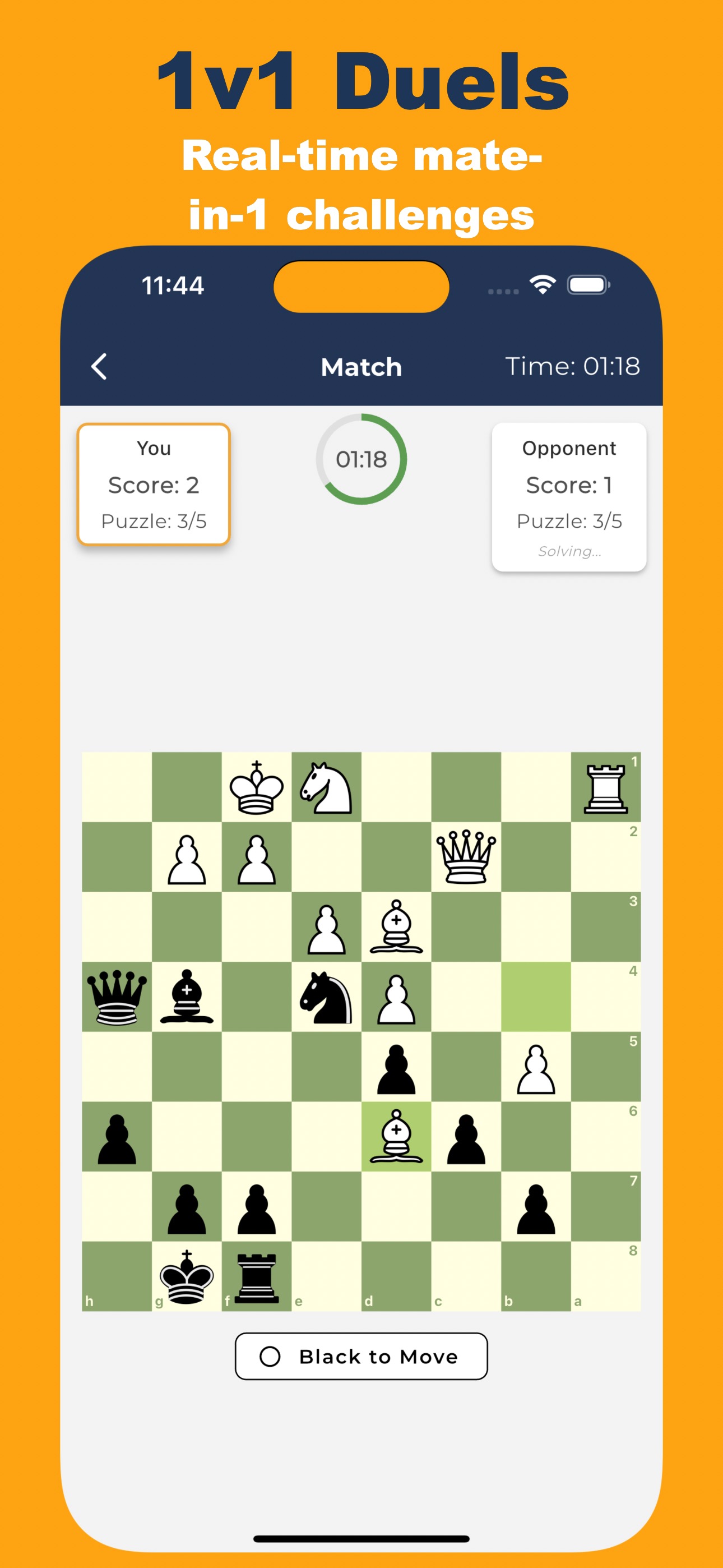
The duel screen keeps both players' state visible in real time. The server is the authoritative source of truth; the client handles display.
Bot Fallback
Real-time duel mode works well when the player pool is large enough to find a fair match quickly. VibeChess launched without a large player pool.
The solution was a bot fallback: after fifteen seconds in the queue without a human match, the system pairs the player with an AI opponent calibrated to their current Elo. The duel loop stays intact. The player gets a real-time experience. The match still feels competitive because the difficulty tracks the player's rating.
This decision mattered more than it looked on paper. Without it, early users landing in duel mode would sit in an empty queue and leave. With bot fallback, the multiplayer promise is always kept, even at low traffic. It is not a workaround. It is the architecture decision that protects the product until a real player pool forms.
Progress Systems
Elo ratings are useful for fair matchmaking. They are also UX. A number that responds to match results gives the player a reason to care about each game beyond the game itself. VibeChess surfaces the Elo change after every match, maintains leaderboards, and stores match history so players can review completed games.
The streak system — with freeze recovery — works on the same principle. Streaks build a daily habit. The freeze mechanic reduces the punishment for a missed day from a full reset to something recoverable. Small product decisions at this level make a measurable difference in whether players return.
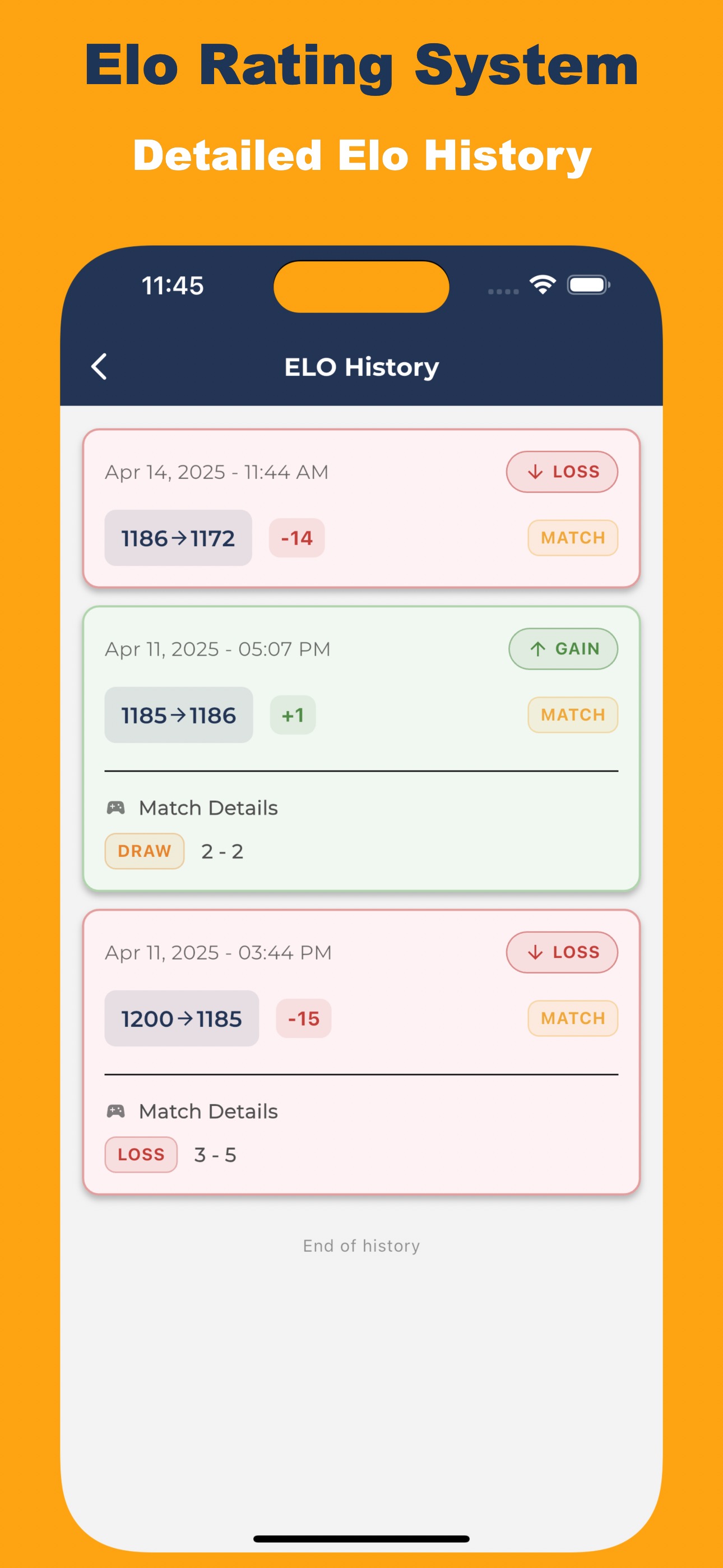
Elo history gives players a visible record of their progression. A number that moves in response to results gives the player a reason to care about each match beyond the game itself.
Shipping as a Real Product
The Flutter app and backend are only part of the product. The rest is the operational layer that lets a stranger download the app and use it without hitting a broken state:
- Subscriptions enforced consistently across app and backend, with server-side validation so limits cannot be bypassed at the client
- Push notifications for daily puzzle reminders and match activity
- Crash reporting to surface production failures before they compound
- Analytics to understand how players actually move through the app
- In-app review prompts placed at high-engagement moments
- Privacy policy, terms of service, support contact, and account deletion
Account deletion deserves specific mention. It is often the last feature added and the first thing flagged in an app store review. Building it correctly means deleting or anonymizing all user-linked data, not just the auth record. Both app stores require it. Users expect it. It is not optional.
What Changed After Real Users Arrived
The plan before launch covers what you think players will do. Analytics after launch covers what they actually do.
The highest-signal post-launch inputs were session recordings, event funnels, and direct user feedback. Each surfaced something the pre-launch model missed: where players dropped out of onboarding, which difficulty range caused the most quits, how long players waited in the duel queue before abandoning, and which UI moments caused visible confusion.
The work after launch was iteration: watch the data, form a hypothesis, change one thing, watch again. That loop — not the initial build — is where the product became more useful. The core loop was always sound. The surrounding systems needed real usage to reveal where friction lived.
Lessons
Plan for low liquidity before you have users. A multiplayer product with no player pool is not a multiplayer product. Bot fallback is the architecture decision that keeps the promise until traffic arrives.
Guest mode is a state-management problem, not just an acquisition strategy. Guest progress needs to feel real. The transition to an authenticated account needs to be clean. Both require explicit design; neither works by default.
Real-time features should be scoped around the product loop. The real-time engineering in VibeChess exists to serve mate-in-one duels, not to demonstrate technical capability. Socket.IO is in the stack because the product required it, not the other way around.
A mobile app is not shipped until the operational layer is real. Subscriptions, support, privacy, deletion, analytics, and crash reporting are not finishing touches. They are the product surface that strangers encounter.
Post-launch iteration requires instrumentation before launch. You cannot iterate on data you did not collect. Analytics and crash reporting need to be wired up before the first real user arrives, not after the first complaint.
VibeChess is available on the App Store and Google Play.